ADD THE LEVAIN
Once the dough has rested for an hour or so, add:
- The levain
- 18 grams salt
- 50 grams water
When you browse online, you’ll notice that often bread recipes call for a very precise amount of levain. Don’t worry about that; just add the full amount you built earlier.

Use your hand to incorporate the ingredients. I repeatedly squeeze the dough in my fist until reasonably well mixed. At this stage, you’ll notice the dough isn’t smooth. You’ll feel clumps throughout the mixture. Pinch them out with your fingers until dough feels kind of ropey, but smooth. (It’s hard to describe, but you’ll recognize what I’m describing once you get your hand in the dough.)
WORK THE DOUGH
Once you’ve squeezed and pinched the dough to incorporate the ingredients, it’s time to start activating the gluten in the dough. Gluten is a protein that allows the dough to become elastic and stretchy.
You won’t knead the dough. Instead:
- Reach down the side of the bowl, grab a bit of dough from the bottom, pull it up, and fold it over the top of the dough.
- Turn the bowl a little, reach into the bowl, grab a bit of dough from the bottom, pull it up, and fold it over the top of the dough.
- Turn the bowl a little and repeat.
It’s a little like you’re giving your dough a wedgie.
Repeat this process until the dough is smooth and elastic. It may take 30 or 40 wedgies, but you’ll feel the difference by the end. The dough won’t look ropey and will feel thicker and more substantial.
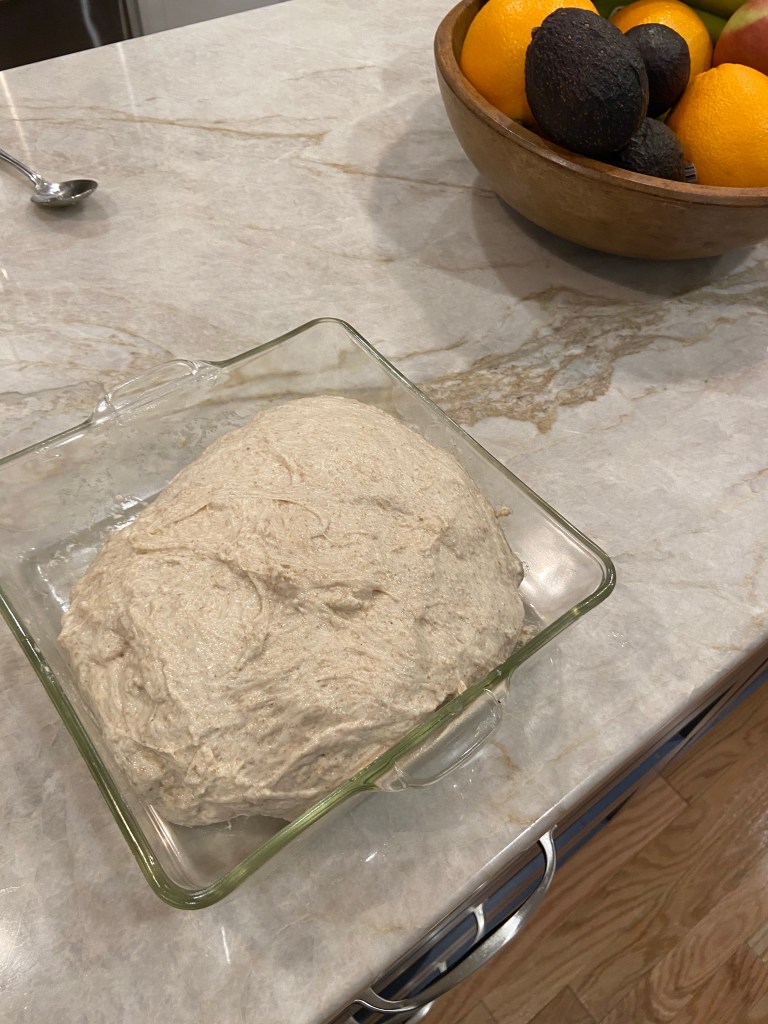
After the wedgies, transfer the dough to a different bowl. (For this blog, I put the dough in a baking dish to make it easier to see.) Let the dough rest 30 minutes.
 Bread Made Easier
3 thoughts on “Sourdough Recipe”